
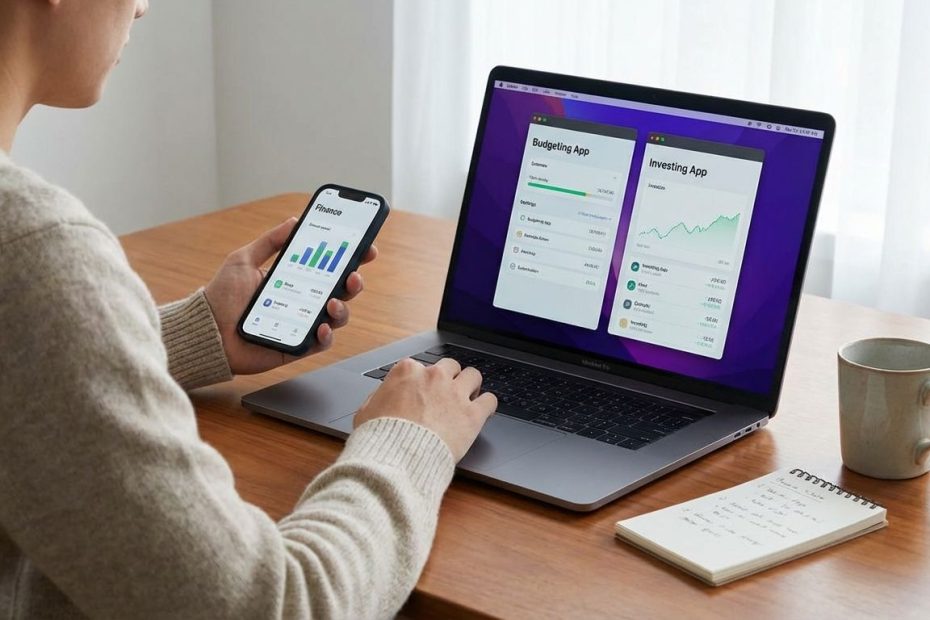
You can build real-world finance skills in college faster by using digital platforms that force real actions, budgeting with categories, tracking bills, monitoring credit, and placing simulated trades with rules, rather than passively consuming “financial literacy” content.
This guide maps eight platforms to the exact skills employers and adult life demand: cash-flow control, bill planning, credit hygiene, and investing mechanics. You’ll get a practical way to choose the right tool, set it up without getting stuck, and run a simple weekly routine that produces measurable progress by mid-semester.
1. YNAB (You Need A Budget)
YNAB is built for the skill most students lack: deciding where your money goes before it disappears. You assign every dollar a job, plan upcoming bills, and actively move money between categories when real life changes. That trains decision-making, not just tracking, which is the difference between “I know where my money went” and “I controlled where it went.”
The pricing is straightforward and public: $109 per year on the annual plan, or $14.99 per month, plus a 34‑day free trial when signing up directly.
To get value quickly, set up only 10–15 categories for the first month: rent, groceries, dining, gas/transport, subscriptions, school costs, personal, and a small “buffer” category. Then schedule a 15‑minute weekly check-in where you reconcile balances and adjust categories based on actual spending. That weekly cadence builds the habit that carries into your first full-time job, when paychecks and recurring bills become non-negotiable.
2. EveryDollar
EveryDollar is a cleaner on-ramp if a student wants a simpler monthly budget flow with fewer moving parts. It still pushes a zero-based approach where income is assigned to planned categories, which is the core muscle you want to build in college. The free version works for planning, and the paid tier reduces friction by automating parts of the workflow.
EveryDollar Premium pricing is also explicit: $17.99 per month or $79.99 per year, and it advertises a 14‑day free trial for new users.
Use it well by running a “fixed-cost audit” once per semester. List every recurring cost, streaming, gym, software, phone plan, then decide which ones actually earn a spot in your budget. This is where most students free up meaningful cash without needing a higher income, and the act of cutting or renegotiating subscriptions is a real-world finance skill on its own.
3. CashCourse
CashCourse is designed for higher education use, which matters if you want something aligned with campus life: student loans, part-time income, campus job benefits, and “adulting” transitions. When a school provides it, you get a structured curriculum feel with practical tools and modules that fit common student situations.
To make CashCourse pay off, treat it like a lab, not a reading assignment. Pick one module per week and pair it with a real action: update your budget categories, set a bill reminder, pull a statement, or compare checking account fees. The win condition is changed behavior, not completed lessons.
If your campus promotes CashCourse through the financial wellness office, use the platform as a signal that you can get live support too. Digital learning sticks better when you can ask a person one targeted question after you hit friction.
4. iGrad Financial Wellness
iGrad is another campus-centered platform that shows up frequently in university financial wellness programs. The advantage is structure and relevance: content, checklists, and tools aimed at the actual decisions you face in college and right after graduation. If your school integrates it into orientation, first-year seminars, or career services, you can move faster because the path is already organized.
Run iGrad like a project with deliverables. Commit to finishing the sections that directly influence cash flow and employment outcomes: budgeting basics, credit fundamentals, and salary/benefits education. Then create a one-page personal “money operating plan” you can revisit each semester: income sources, fixed costs, variable costs, current debts, and a savings target.
This type of platform works best when you connect it to real deadlines. Add calendar reminders for tuition dates, rent due dates, internship application windows, and expected income deposits. Your money system becomes predictable when your schedule is predictable.
5. Credit Karma
Credit Karma is useful because it pushes you into ongoing credit awareness, not once-a-year panic. In college, credit mistakes often happen through inattention, missed due dates, high utilization, or not noticing issues early. Monitoring reduces surprises, and surprises are what create expensive fixes.
Build the skill by checking on a schedule, not emotionally. Put one recurring reminder on your calendar each month to review alerts and verify key basics: open accounts you recognize, balances that match expectations, and no weird address or identity fields. Keep it boring and consistent.
Then connect credit hygiene to behavior: autopay at least the minimum, pay twice per month if utilization spikes, and keep one small recurring charge you always pay off. Your credit profile improves through routine, not intensity.
6. TradingView Paper Trading
TradingView’s paper trading is a strong choice for learning mechanics: order entry, position sizing, and how price movement affects a portfolio. TradingView describes it as a risk-free simulator with no deposits and no real money involved, designed to test skills in close-to-real market conditions.
Paper trading becomes “real-world” when you run rules that mirror reality. Start with a fixed virtual account size, set a max position size, and cap how much you can lose on one trade or in one week. Track every trade in a journal: entry reason, exit reason, and whether you followed the rule set. That builds discipline, which is the missing ingredient in most simulator experiences.
Keep the scope tight during the first month. Focus on learning order types and execution flow before chasing performance. You’re training competence, not entertainment.
7. Webull Paper Trading
Webull paper trading is another practical simulator option, and its help docs make access steps explicit across mobile, desktop, and web. On mobile, Webull directs you to Menu, then More, then Paper Trading.
Webull also defines paper trading as a simulated experience using a virtual account funded with simulated cash, aimed at practicing and testing strategies without financial risk.
To keep this from turning into random clicking, run a simple “10-trade protocol.” Place ten trades with identical position sizing rules, log screenshots of entries and exits, and review the set as a batch. You’ll spot repeated mistakes quickly, chasing entries, moving stops, overtrading, which is the point of simulation. If you treat it like a skill drill, Webull can accelerate your comfort with a real brokerage interface without putting tuition money on the line.
8. HowTheMarketWorks
HowTheMarketWorks fits a classroom-style stock market game format, which is valuable when you want practice with structure. It’s typically used in education environments where you can compete, follow assignments, or run a time-boxed “season” of investing decisions. The game format also helps if motivation drops when learning is purely self-directed.
The best way to use it is to create two portfolios inside your process, even if the platform itself is gamified. Keep one portfolio “long-term rules only” with limited trades and a schedule, and treat the second as the sandbox for experimentation. That separation keeps you from learning the wrong lesson, which is that constant trading equals skill.
Tie the experience to real finance basics. Track what drives returns, price movement, dividends where applicable, and how concentration increases volatility. Those are concepts that matter in internships, analyst interviews, and personal investing later.
What Should You Use In College?
- Budgeting: YNAB or EveryDollar
- Credit: Credit Karma
- Investing practice: TradingView Paper Trading or Webull Paper Trading
- Campus programs: CashCourse or iGrad
- Classroom stock game: HowTheMarketWorks
Build Your Weekly Money Routine And Keep It After Graduation
Pick two platforms, one for cash flow and one for investing or credit, and commit for 30 days before switching tools. If you budget weekly and monitor credit monthly, you’ll feel the difference by the middle of the semester: fewer surprises, fewer urgent money decisions, and more control over what you can afford. Add paper trading only after the budget is stable, since investing practice without cash-flow control usually becomes noise. Keep the system simple, measure progress with one metric per skill, category overspending frequency, on-time payments, and rule-following rate in simulations. Once those basics are locked in, you can expand into deeper topics without losing consistency.
Want more practical, college-ready finance playbooks like this? Read the rest of the posts on my tumblr.