
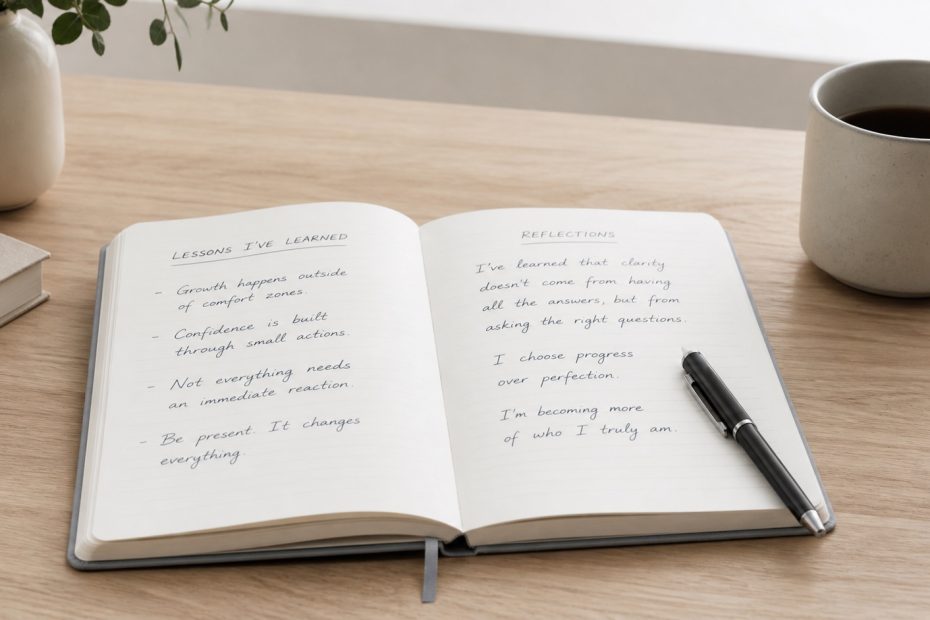
Personal reflection examples help you understand how to turn real experiences, emotions, decisions, and lessons into clear writing. A strong personal reflection does not simply describe what happened; it explains what the experience revealed, how your thinking changed, and what you understand about yourself now.
Many people struggle with self-reflection because their thoughts feel scattered, too private, or too difficult to organize. The right examples can give structure without making the writing feel fake. Whether you are reflecting on life, personal growth, difficult experiences, technology, relationships, habits, or self-awareness, the goal is to write with honesty, clarity, and emotional accuracy.
What Is a Personal Reflection?
A personal reflection is a written exploration of your thoughts, emotions, reactions, and lessons from an experience or idea. It is not just a memory, diary entry, or summary of events. It is a deeper explanation of what the experience meant and how it shaped your understanding.
The most useful personal reflections answer a few direct questions: What happened? Why did it matter? How did it affect you? What did it reveal? What changed afterward? These questions help the writing move from description into meaning.
A personal reflection can focus on many areas of life. It may examine a major decision, a difficult relationship, a period of uncertainty, a personal habit, a belief, a moment of growth, a spiritual question, a digital experience, or a pattern you finally recognized. The topic does not need to sound dramatic. It only needs to be honest and specific.
Good reflection is not about sounding perfect. It is about understanding yourself more clearly.
Why Do Personal Reflection Examples Help?
Personal reflection examples help because they show how to organize thoughts that may feel difficult to explain. Many people know what they feel, but they do not know how to turn those feelings into clear writing. Examples provide a structure for that process.
The strongest examples do not tell you what to think. They show how reflection works. They move from experience to emotion, then from emotion to insight, then from insight to growth. That movement is what makes reflective writing meaningful.
Examples also help you avoid two common problems: staying too surface-level or overthinking everything. Surface-level reflection only describes the event. Overthinking repeats the same thought without reaching clarity. A good example shows how to go deeper without getting stuck.
The goal is not to copy someone else’s story. The goal is to use the structure of reflection and apply it to your own life with honesty.
What Makes a Personal Reflection Meaningful?
A personal reflection becomes meaningful when it connects a specific experience to a clear insight. The writing should show what you noticed, what you questioned, what changed, or what became more important to you.
Meaningful reflection often includes tension. That tension may involve who you were versus who you are becoming, what you believed versus what you learned, or what you wanted versus what was actually healthy for you. This tension gives the writing emotional weight.
A reflection also becomes stronger when it avoids vague lessons. Instead of saying, “I learned a lot,” the writing should name the actual lesson. Did you learn to set boundaries? Did you recognize a pattern? Did you understand how technology affects your attention? Did you realize you were confusing productivity with self-worth? Did you become more honest about what you need?
Meaning comes from precision. The clearer the insight, the more valuable the reflection becomes.
Personal Reflection Example for Life Lessons
A life lesson reflection usually focuses on a moment, season, or repeated experience that changed the way you see yourself or the world. It does not need to cover your entire life. The strongest reflection often comes from one clear lesson.
A strong life reflection can follow this structure: describe the experience, name the emotion, explain what it revealed, and connect it to how you think or act now. This keeps the writing grounded and prevents it from becoming too broad.
A life lesson reflection may explore responsibility, patience, confidence, grief, independence, discipline, forgiveness, change, or uncertainty. The key is to connect the lesson to a real shift in awareness.
A useful writing pattern is:
“I used to believe ______, but this experience helped me understand ______. At the time, I felt ______ because ______. Looking back, the lesson was not simply ______; it was ______. Now, I approach ______ with more ______.”
This structure works because it shows movement. The reader can see the difference between your earlier understanding and your current awareness.
Personal Reflection Example for Personal Growth
A personal growth reflection focuses on change. It explains how you developed a new habit, recognized a weakness, built confidence, handled discomfort, or became more self-aware.
Growth does not need to be dramatic. It can come from becoming more patient, more disciplined, more honest, more focused, or more willing to ask for help. Small changes often reveal major patterns.
A strong growth reflection does not pretend progress was perfect. It acknowledges resistance, setbacks, and discomfort. That honesty makes the writing more believable and more useful.
A clear structure for this kind of reflection is:
“The change began when I noticed ______. At first, I responded by ______. Over time, I realized ______. The most difficult part was ______. The most important growth came from learning to ______.”
This type of reflection works well because it does not only celebrate the outcome. It shows the process behind the growth.
Personal Reflection Example for Self-Awareness
A self-awareness reflection focuses on understanding your own patterns. It may explore how you react under pressure, why certain situations affect you strongly, what motivates you, or what you avoid.
Self-awareness is not the same as self-criticism. The goal is not to judge yourself harshly. The goal is to see yourself more accurately.
This type of reflection often starts with a repeated pattern. You may notice that you avoid difficult conversations, overcommit, compare yourself online, shut down during conflict, or seek approval before making decisions. The reflection becomes meaningful when it explains what the pattern reveals.
A useful structure is:
“I noticed a pattern in the way I ______. At first, I thought it meant ______. After reflecting on it, I realized it was connected to ______. Understanding this helped me see ______. The next step is to ______.”
This example structure helps move the writing away from blame and toward awareness. It also creates a practical ending by identifying what needs to change.
Personal Reflection Example About a Difficult Experience
Reflecting on a difficult experience requires care. The goal is not to force a positive message or pretend everything became clear immediately. The goal is to understand what happened, how it affected you, and what you need now.
Difficult experiences may involve loss, conflict, disappointment, rejection, failure, confusion, or emotional harm. A strong reflection handles these topics with honesty and boundaries. It does not need to reveal every detail to be meaningful.
A useful structure is:
“This experience affected me because ______. At the time, I felt ______. One part I did not fully understand then was ______. Looking back, I can now see ______. The lesson I carry forward is ______, and the boundary or choice I need now is ______.”
This type of reflection should avoid self-blame. It can include accountability where needed, but it should not turn pain into punishment. The purpose is clarity, not harsh judgment.
Personal Reflection Example About Relationships
A relationship reflection explores what you learned from connection, conflict, communication, trust, boundaries, or emotional patterns. It can focus on family, friendship, partnership, mentorship, community, or any relationship that shaped your understanding.
The strongest relationship reflections do not focus only on what another person did. They examine your own response, expectations, needs, and growth. This creates a more balanced and mature reflection.
A relationship reflection may ask: What did this relationship teach me about communication? What boundary became clear? What did I ignore? What did I learn about trust? What pattern do I want to stop repeating?
A useful structure is:
“This relationship helped me understand ______. I used to respond by ______, but over time I noticed ______. The most important lesson was ______. I now understand that healthy connection requires ______.”
This structure keeps the reflection focused on insight rather than blame. It also helps turn emotional experience into personal understanding.
Personal Reflection Example About Technology and Digital Life
A technology reflection examines how digital spaces affect your attention, confidence, identity, relationships, learning, or sense of connection. Many people use online communities for support and information, but they also question how technology shapes their habits and emotions.
A strong reflection about digital life should avoid simple claims like “technology is good” or “technology is bad.” The better approach is to explore the specific effect technology has on your life. That could include distraction, comparison, creativity, connection, loneliness, learning, or digital identity.
A useful structure is:
“My relationship with technology became clearer when I noticed ______. Online spaces helped me ______, but they also made me more aware of ______. The biggest change in my thinking was ______. Now, I want to use technology in a way that supports ______ instead of ______.”
This type of reflection works because it holds more than one truth. Technology can connect and distract at the same time. Honest reflection allows that complexity.
Personal Reflection Example About Goals and Motivation
A reflection about goals and motivation explores why something matters to you and what drives your actions. It can also examine why motivation fades, why certain goals feel forced, or why discipline matters more than temporary excitement.
This kind of reflection is useful because many people set goals without understanding the deeper reason behind them. A goal becomes more meaningful when it connects to values, identity, responsibility, or long-term growth.
A useful structure is:
“I wanted to achieve ______ because ______. Over time, I realized my motivation was connected to ______. The challenge was not only ______; it was also ______. This reflection helped me understand that I need ______ to stay consistent.”
This reflection helps separate surface motivation from deeper purpose. It also creates room to examine discipline, habits, and emotional resistance.
Personal Reflection Example About Mistakes
A reflection about mistakes should focus on learning, responsibility, and change. It should not become a long self-attack. The point is to understand what happened and what the mistake revealed.
A strong mistake reflection names the decision, explains the impact, identifies the lesson, and shows what will change moving forward. This makes the writing accountable without becoming overly harsh.
A useful structure is:
“The mistake I made was ______. At the time, I thought ______. The result showed me ______. The lesson was ______. Going forward, I need to ______.”
This kind of reflection is powerful because it turns discomfort into growth. It also shows emotional maturity. Everyone makes mistakes, but not everyone learns from them with clarity.
Personal Reflection Example About Identity
An identity reflection explores how you understand yourself, your values, your beliefs, your role in the world, or the way you present yourself to others. This can include cultural identity, personal values, career identity, digital identity, faith, creativity, or life direction.
Identity reflections often become meaningful because they deal with change. You may realize that an old version of yourself no longer fits, or that you have been living according to expectations that do not match your values.
A useful structure is:
“I used to define myself by ______. Over time, I began to question ______. This reflection helped me see that my identity is more connected to ______ than ______. I now understand myself as someone who values ______.”
This structure helps you write about identity without becoming too vague. It keeps the reflection connected to a clear shift in self-understanding.
Personal Reflection Example About Faith or Belief
A reflection about faith or belief should be thoughtful, respectful, and honest. It may explore doubt, growth, commitment, questions, values, discipline, or the way belief shapes daily decisions.
This type of reflection does not need to sound certain about everything. In many cases, the reflection is meaningful because it shows a serious effort to understand belief more deeply.
A useful structure is:
“My belief about ______ has changed because ______. I used to think ______, but now I see ______. The question I still carry is ______. What matters most to me now is ______.”
This kind of reflection allows room for humility. It does not force a finished conclusion when the topic is still developing. It focuses on sincerity, growth, and understanding.
Personal Reflection Example About Craving, Habits, and Self-Control
A reflection about craving or habits explores the difference between what you want in the moment and what supports your long-term well-being. It may focus on distraction, comfort, avoidance, discipline, emotional triggers, or patterns of behavior.
This type of reflection is useful because habits often reveal deeper needs. A craving may point to stress, boredom, loneliness, pressure, reward-seeking, or avoidance. Reflecting on it helps you understand the pattern instead of only reacting to it.
A useful structure is:
“I noticed I kept reaching for ______ when I felt ______. At first, I thought the issue was ______. After reflecting, I realized the deeper pattern was ______. The healthier response I want to build is ______.”
This example helps connect behavior to emotion. That connection is where self-awareness begins.
How Do You Write Your Own Personal Reflection?
To write your own personal reflection, start with one experience, emotion, or question. Do not try to cover everything. A focused reflection is stronger than a broad one.
Begin by writing plainly. Describe the experience in a few sentences, then move quickly into what it meant. Ask yourself what changed, what became clearer, what emotion was strongest, and what lesson still matters.
A useful reflection structure includes:
- Experience: What happened or what topic are you reflecting on?
- Reaction: What did you feel, think, or notice?
- Meaning: Why did it matter?
- Insight: What did you learn?
- Growth: What changed or needs to change?
- Conclusion: What do you understand now?
This structure works for school assignments, journals, essays, personal growth writing, and private reflection. It keeps the writing honest, organized, and meaningful.
What Should You Avoid in a Personal Reflection?
Avoid writing only a summary. A personal reflection needs analysis, not just description. If the writing only explains what happened, it has not reached reflection yet.
Avoid vague lessons. Phrases such as “it made me stronger” or “I learned a lot” need more detail. Explain what kind of strength, what specific lesson, and how that insight affects your choices now.
Avoid oversharing when the details do not serve the reflection. Honest writing does not require exposing every private moment. Share enough to make the lesson clear, then keep the focus on meaning.
Avoid turning reflection into overthinking. If the writing keeps circling the same regret, fear, or uncertainty without producing insight, pause and return to structure. Ask what you know now, what you can control, and what one useful next step might be.
Why Do Personal Reflections Matter for Growth?
Personal reflections matter because they turn experience into understanding. Without reflection, people often repeat patterns without recognizing them. With reflection, those patterns become visible.
Reflection helps you understand your values, emotional reactions, habits, decisions, and relationships. It also helps you notice when something no longer fits. That awareness can support better boundaries, clearer goals, stronger communication, and more intentional choices.
Personal growth does not come only from experience. It comes from paying attention to experience. Reflection is the process that makes that attention useful.
The more clearly you understand yourself, the better you can respond to life instead of simply reacting to it. That is why personal reflection remains valuable for life, growth, and self-awareness.
What Are Good Personal Reflection Examples?
Good personal reflection examples connect an experience to a lesson. They explain what happened, how it affected you, what you learned, and how the insight changed your choices, habits, or self-awareness.
Conclusion: Personal Reflection Turns Experience Into Insight
Personal reflection examples give you a practical way to write about life, growth, and self-awareness with more clarity. They show how to move from experience to emotion, from emotion to insight, and from insight to meaningful change.
The strongest reflections do not need dramatic stories or perfect conclusions. They need honesty, structure, and a clear lesson. Whether you are reflecting on relationships, technology, goals, mistakes, identity, faith, habits, or difficult experiences, the purpose is the same: to understand yourself more clearly.
A meaningful personal reflection helps you name what happened, recognize what changed, and carry the lesson forward. That is where reflective writing becomes more than a record of the past. It becomes a tool for growth, clarity, and self-awareness.