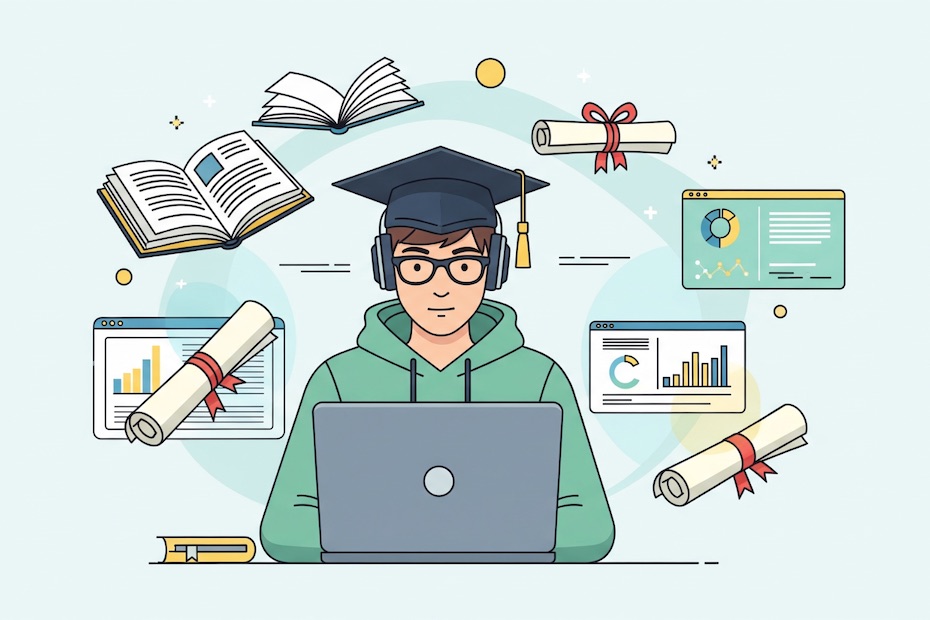
You gain flexibility in your studies by using e-learning platforms that let you control pace, timing, and subject focus without sacrificing quality. These platforms ensure you learn effectively while adapting to your busy schedule.
In this article, you’ll explore ten e-learning platforms designed to provide college students with flexible, career-relevant learning. You’ll see how each platform works, why it matters, and how to integrate it into your academic and professional growth.
1. Coursera: University-Level Learning on Your Terms
You access courses from top universities like Stanford and Yale through Coursera. Programs range from single classes to full degrees, but you decide the pace.
Coursera’s guided projects let you complete practical assignments in hours, while specializations give you structured pathways in fields like data science or business. That adaptability makes it easy to fit advanced education into your semester or internship schedule.
2. edX: Academic Rigor with Flexible Schedules
You gain the credibility of courses created by institutions like MIT and Harvard when you choose edX. The platform emphasizes interactive learning—videos, quizzes, and peer engagement.
Most courses can be audited free, with certificates available for a fee. This balance of structure and freedom allows you to manage academic rigor without rigid deadlines.
3. Udemy: Skills at Your Own Speed
You benefit from Udemy’s massive library of over 200,000 courses spanning technology, design, and entrepreneurship. Once you purchase a course, you keep lifetime access.
That means you return to lessons whenever your workload permits, without worrying about deadlines. For students balancing classes, jobs, or internships, Udemy’s flexibility is unmatched.
4. Khan Academy: Free Mastery-Based Learning
You strengthen foundational knowledge with Khan Academy’s free, mastery-based system. Whether it’s calculus, economics, or history, you can study at your pace with no costs attached.
Its adaptive learning pathways ensure you master a topic before moving forward, helping you reinforce academic performance between semesters. It’s especially valuable for bridging knowledge gaps.
5. LinkedIn Learning: Professional Development Made Flexible
You prepare for internships and career growth with LinkedIn Learning’s catalog of over 16,000 courses. It covers technology, business, and soft skills aligned to job readiness.
The platform integrates directly with your LinkedIn profile, allowing you to showcase certificates to recruiters. With self-paced modules, you fit in professional development whenever your schedule allows.
6. Skillshare: Short Lessons for Creative Growth
You sharpen creative skills with Skillshare’s project-based courses. Topics include graphic design, photography, marketing, and entrepreneurship.
Each course is short and practical, ideal for evenings or weekends. You get hands-on projects that develop skills without the formality of exams or deadlines.
7. FutureLearn: Compact Courses with Global Perspective
You engage with short, structured courses on FutureLearn, developed by universities and institutions worldwide. ExpertTracks allow you to dive deeper into specific fields.
The compact format is ideal during semester breaks or when you want focused learning on a specific area like sustainability, healthcare, or digital skills.
8. Udacity: Career-Focused Nanodegrees
You accelerate career preparation through Udacity’s Nanodegree programs, created in partnership with companies like Google and IBM. Courses focus on tech skills such as AI, data, and programming.
The self-paced modules combine videos, projects, and mentorship. While more structured than other platforms, Udacity still accommodates your personal pace, making it viable alongside academic commitments.
9. SWAYAM: Accessible Higher Education in India
You gain free access to high-quality courses from top Indian institutions through SWAYAM, a government initiative. Its offerings span engineering, social science, and management.
The platform provides certifications at low or no cost, with flexible pacing. It’s an essential tool for students in India seeking affordable, credible online education.
10. MasterClass: Learn from World-Class Experts
You develop unique skills and perspectives through MasterClass, which delivers lessons from industry leaders like Gordon Ramsay, Serena Williams, and Shonda Rhimes.
Though less academic, it builds creativity and personal growth. Each class is self-paced, so you fit in world-class learning between your college demands.
Why E-Learning Flexibility Matters for College Students
You balance classes, part-time work, and extracurriculars. Flexibility ensures you can scale learning intensity up or down depending on your semester demands.
A 2023 survey found that over 60% of students prefer online learning for its adaptability. When you control pace and topic focus, you maximize both academic performance and career preparation.
Best E-Learning Platforms for Flexible College Study
- Coursera & edX: University-level flexibility
- Udemy & Skillshare: Skills on demand
- LinkedIn Learning: Job-ready training
- FutureLearn & Udacity: Compact credentials
- Khan Academy & SWAYAM: Free learning options
- MasterClass: Creative growth anytime
In Conclusion
You succeed academically and professionally when you use e-learning platforms that adapt to your schedule. Whether you need academic rigor, practical skills, or creative outlets, the ten platforms highlighted above give you control of when, how, and what you learn. That flexibility turns your college years into a launchpad for lifelong growth.
Study when it works for you—these e-learning platforms make it easy to juggle classes, jobs, and life while picking up skills for your future. Learn more here: Clifford Boro